
Employee Retention Credit · Bottom Line Concepts · Performance-Based Partnership
$17M in Sales in 6 Months for a Financial Services Company Using Cold Email
Category
Tax Credit & Incentive Recovery
Industry
Financial services
Company Size
Inc. 5000 company
Duration
6 Months
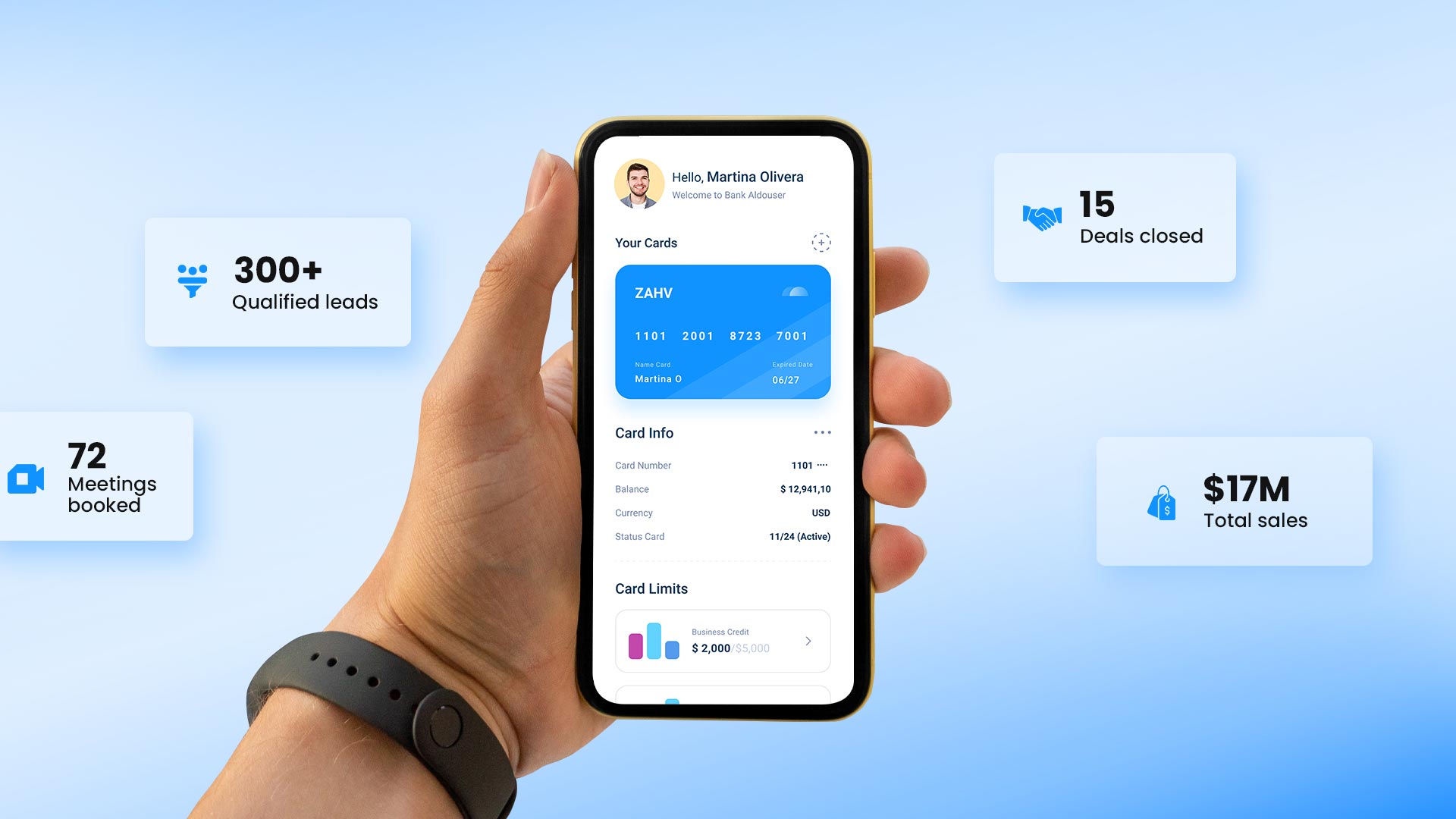
300+
Qualified leads
72
Meetings booked
15
Deals closed
21%
Meeting-to-Close Rate
The Opportunity
The Employee Retention Credit created a finite-window financial opportunity for U.S. businesses that retained employees through the COVID period.
The underlying opportunity was substantial. The problem was distribution.
Reachoutly mapped an addressable outbound universe of approximately 500,000 U.S. businesses for the campaign.
Why Existing Distribution Wasn’t Enough
Bottom Line Concepts already had ERC expertise, fulfillment capability, and an established affiliate network.
What it didn’t have was systematic coverage of the available market.
Existing affiliates were each working pieces of the opportunity independently. Nobody was treating market coverage itself as an operating problem: defining the addressable universe, segmenting it, building dedicated outbound infrastructure, and systematically reaching potential client companies while the opportunity remained active.
The constraint wasn’t fulfillment. It was distribution.
The Structure
Bottom Line Concepts had the specialist capability to fulfill ERC engagements at scale.
Reachoutly’s role was different: build the distribution layer that put that capability in front of substantially more businesses.
Reachoutly
Market mapping · Account research · Infrastructure · Messaging · Outbound · Qualification · Meeting origination
Bottom Line Concepts
Technical assessment · Sales · Proposal · Contracting · ERC fulfillment
Each side operated where it had the advantage.
What Actually Happened
Between August 2023 and January 2024, Reachoutly ran nine outbound campaigns.
The account universe was broad, roughly 500,000 companies. Our initial stakeholder strategy inside those accounts was too narrow.
We started with a single contact per company, then corrected. The first campaigns targeted CEOs and CFOs exclusively. Reply rates came in low. One decision-maker per company wasn’t enough surface area to generate consistent engagement. We shifted to multi-stakeholder account-based marketing, reaching controllers, finance directors, and VPs of finance alongside CFOs and CEOs within each target company. Response quality recovered once more than one path into an organization existed.
On September 14, 2023, the IRS imposed a moratorium on processing new ERC claims, in the middle of our active outreach window. Claims already filed continued moving through the pipeline, slower and under greater scrutiny, but every new claim we were generating conversations toward now faced an uncertain timeline. We stayed in market, gave prospects an accurate picture of where the program stood rather than manufacturing urgency, and kept qualifying businesses on the strength of the underlying opportunity.
Both moments became standing checks on how we approach new markets:
Build multi-stakeholder reach into a campaign from day one.
Treat regulatory and program risk as live variables throughout an engagement, not fixed assumptions made at launch.
The Outcome
Over six months, the partnership closed 15 engagements from 72 meetings, a 21% meeting-to-close rate, producing $17M in attributable client sales, an average of roughly $1.13M per closed engagement.
What This Case Proves
Bottom Line Concepts already had the ERC expertise and fulfillment capability.
Reachoutly’s role was different: build systematic enterprise distribution around that expertise and originate the conversations their team could convert and fulfill.
15 engagements closed. $17M in attributable client sales.